
A Comprehensive Glossary of Dubai Commercial Real Estate Terms: From Ejari to Shell & Core
1. The Regulatory Landscape and Governing Bodies
To operate within the UAE’s commercial sector, one must first understand the entities that define the rules. The regulatory framework is designed to ensure transparency and protect the interests of both landlords and tenants. In a city where growth is rapid, these institutions provide the necessary stability for long-term investment.
Dubai Land Department (DLD)
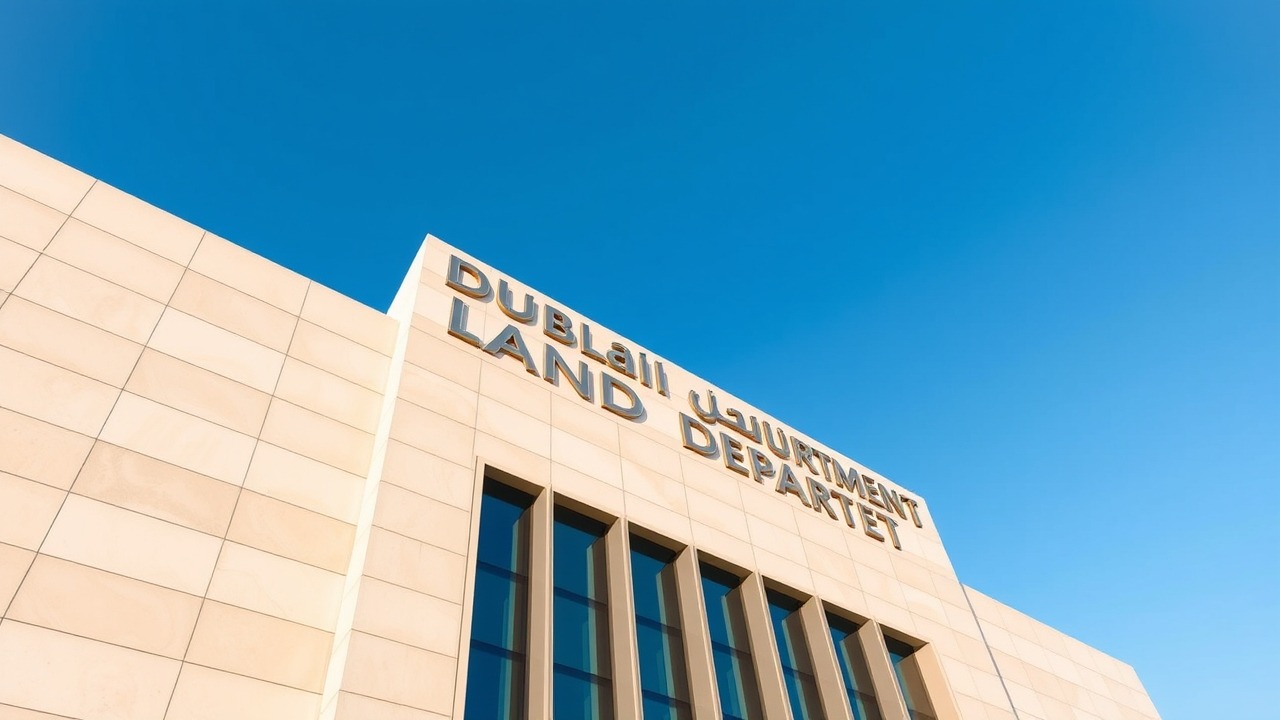
The Dubai Land Department is the primary government entity responsible for all matters related to real estate in the emirate. Established in 1960, the DLD handles the registration of property sales, mortgages, and the issuance of title deeds. For commercial investors, the DLD is the final authority on ownership rights. You can explore more about their mandates on the official Dubai Land Department website. Engaging with the DLD is often the first step in any significant commercial acquisition.
Real Estate Regulatory Agency (RERA)
RERA is the regulatory arm of the DLD. It is tasked with setting the policies and regulations that govern the relationship between landlords and tenants. RERA oversees the licensing of real estate agents, the management of escrow accounts for off-plan projects, and the implementation of the rental index. When negotiating commercial leases, the RERA guidelines often dictate the maximum allowable rent increases and the legal procedures for eviction.
Ejari
Ejari, which translates to “My Rent” in Arabic, is the mandatory electronic registration system for all tenancy contracts in Dubai. Unlike residential leases where a tenant might occasionally overlook this, for commercial entities, Ejari is non-negotiable. It is required to apply for or renew a trade license, set up utility connections with DEWA, and obtain visas for employees. A commercial lease without an Ejari certificate is not recognized by the Dubai courts in the event of a dispute.
2. Property Conditions and Fit-out Terminology
One of the most frequent points of confusion for international businesses entering the Dubai market is the physical state of the office or retail unit upon handover. The terms used here dictate the capital expenditure (CAPEX) required before a business can actually start operating.
Shell and Core
A Shell and Core unit is the most basic form of commercial property. In this state, the developer provides only the concrete structure of the unit. There are no floors (just a concrete slab), no ceilings, and no internal walls. While the basic mechanical, electrical, and plumbing (MEP) connections are brought to the edge of the unit, the tenant is responsible for everything inside. This includes air conditioning ducting, lighting, flooring, and fire safety systems. This is ideal for large corporations that wish to implement a bespoke corporate identity.
Fitted Units
A fitted unit is one where the landlord has already completed the basic internal work. This typically includes tiled or carpeted flooring, a finished ceiling, and basic lighting. For many SMEs, fitted units are preferred because they significantly reduce the time needed to move in. However, the tenant may still need to install internal partitions or specialized networking equipment. If you are looking for ready-to-move-in options, our team can assist at our contact page.

Plug and Play
Plug and Play offices are fully furnished and equipped with desks, chairs, high-speed internet, and sometimes even telephony systems. These are common in business centers and co-working spaces. While the rent per square foot is significantly higher for these units, the lack of initial CAPEX and the flexibility of short-term leases make them attractive for startups and representative offices of multinational firms.
3. Legal Ownership and Tenure Structures
Ownership in Dubai is not a one-size-fits-all model. The type of ownership dictates who can buy the property and what they can do with it over a long period. Understanding these Dubai commercial real estate terms is vital for protecting your asset’s value.
Freehold vs. Leasehold
- 1. Freehold: In designated “freehold areas,” any nationality can own the property and the land it sits on indefinitely. This provides the highest level of control and is common in areas like Business Bay and Jumeirah Lakes Towers (JLT).
- 2. Leasehold: This grants the right to use the property for a fixed period, typically up to 99 years. The ownership of the land remains with the freeholder. This is more common in certain older areas or specific government-owned plots.
Musataha
Musataha is a specific type of long-term right that allows a person or company to build on land owned by another party. This right can last for up to 50 years and is often used for industrial projects or large-scale retail developments. The holder of the Musataha right owns the buildings they construct for the duration of the agreement, which can be mortgaged or sold, subject to the terms of the contract.

Usufruct
Usufruct is a real right to use and enjoy the property of another, provided the property remains unaltered. In the context of Dubai commercial real estate terms, it is a form of long-term lease (often up to 99 years) that behaves similarly to ownership but is technically a right of use. It is a common structure for commercial entities operating in specific zones where outright land ownership might be restricted.
4. Financial Terms and Transaction Jargon
The financial side of a commercial deal involves more than just the annual rent. There are several hidden and transparent costs that must be factored into a company’s budget. Especially when considering offplan opportunities, the financial terminology becomes even more critical.
Service Charges and Sinking Funds
Service charges are the annual fees paid by property owners (or sometimes passed to tenants in “net” leases) to cover the maintenance of common areas, security, and building insurance. A sinking fund is a portion of these charges set aside for major capital repairs in the future, such as replacing the building’s elevators or central chiller system. In Dubai, these charges are regulated by RERA to ensure they are fair and used appropriately.
Value Added Tax (VAT)
In the UAE, a 5% VAT is applicable to most commercial real estate transactions, including leases and sales. Unlike residential property, which is largely exempt or zero-rated, commercial property is a taxable supply. Businesses can usually recover this VAT as input tax, provided they are VAT-registered, but it must be factored into the immediate cash flow of the transaction.
Rent-Free Period
A rent-free period is a common incentive offered by commercial landlords, particularly for shell and core units. Since the tenant needs time to carry out fit-out works before they can actually use the space, the landlord may grant three to six months of occupancy without rent. It is important to note that service charges and utility bills are often still payable during this period.
5. Comparison of Commercial Office Types
To better understand the differences between the various states of property, the following table outlines the key differences in costs and timelines.
| Feature | Shell & Core | Fitted | Plug & Play |
|---|---|---|---|
| CAPEX Requirement | Very High (Full construction) | Medium (Partitions/Furniture) | Very Low (Ready to use) |
| Rent per Sq. Ft. | Lowest | Medium | Highest |
| Timeline to Move-in | 4 – 8 Months | 1 – 2 Months | Immediate |
| Customization | Unlimited | Moderate | Limited |
| Typical Lease Term | 5 – 10 Years | 1 – 5 Years | Monthly / 1 Year |
6. Geographic Jurisdictions: Mainland vs. Free Zones
Where you rent your commercial space determines where you can do business. This is one of the most unique aspects of the Dubai market compared to other global hubs.
Mainland (DED)
Mainland properties fall under the jurisdiction of the Dubai Department of Economy and Tourism (DET, formerly DED). Companies licensed on the mainland can conduct business anywhere in the UAE and can bid for government contracts. For commercial real estate, this means your office can be located anywhere that isn’t a designated free zone.
Free Zones
Dubai has over 40 specialized free zones, such as the Dubai International Financial Centre (DIFC), Dubai Multi Commodities Centre (DMCC), and Jebel Ali Free Zone (JAFZA). Each free zone has its own regulatory authority and allows for 100% foreign ownership without a local partner. However, a free zone company is technically restricted to doing business only within that zone or internationally. Real estate within these zones often commands a premium due to the ease of doing business and specialized infrastructure.
Offshore
Offshore companies are generally not permitted to rent physical office space within the UAE. They are used primarily for holding assets or international trade. For businesses requiring a physical presence, mainland or free zone options are the only viable routes.
7. Measurement and Area Definitions
Understanding how space is measured is vital to ensuring you are getting what you pay for. In Dubai commercial real estate terms, different area metrics are used for different purposes.
Gross Leasable Area (GLA)
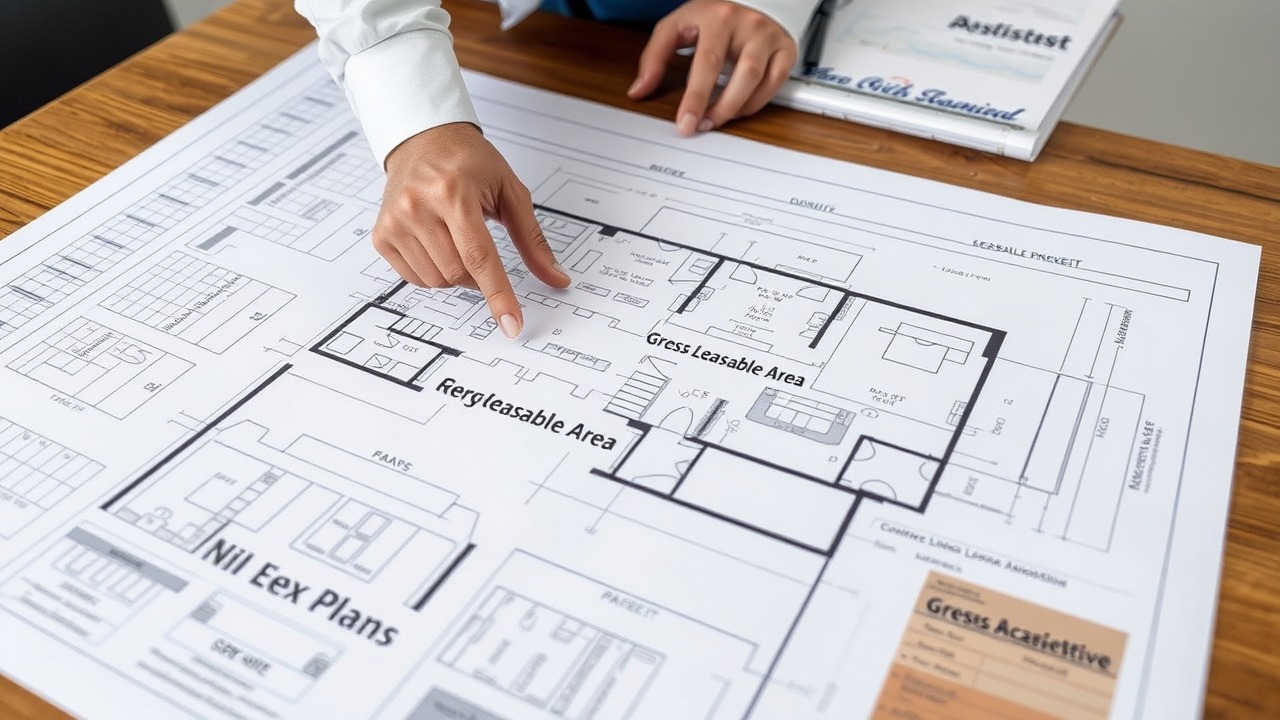
GLA is the total floor area designed for tenant occupancy and exclusive use. This is the figure typically used to calculate your annual rent. It includes the space within the walls but generally excludes common areas like elevator lobbies and shared restrooms, though this can vary depending on the building’s management policy.
Built-Up Area (BUA)
BUA refers to the total area of the building, including everything from the external walls to the parking garage and utility rooms. For investors buying entire buildings or off-plan floors, the BUA is the primary metric for valuation.
Net Internal Area (NIA)
NIA is the usable area within the office, excluding structural columns, stairwells, and permanent internal walls. While GLA is what you pay for, NIA is what you can actually put desks on. A building with a large number of structural columns will have a lower NIA relative to its GLA, representing poor “efficiency.”
8. The Commercial Lease Lifecycle
The process of securing and maintaining a commercial space involves several critical steps and documents that differ from residential transactions.
No Objection Certificate (NOC)
The NOC is a ubiquitous document in the UAE. For commercial tenants, an NOC is required from the developer or building management before any fit-out work can begin. It signifies that the proposed designs meet the building’s structural and safety standards. Obtaining an NOC usually requires the submission of detailed MEP and architectural drawings.
Fit-out Permit
Once an NOC is secured, the tenant’s contractor must apply for a Fit-out Permit from the relevant local authority, such as Dubai Municipality or the specific Free Zone authority (e.g., Trakhees). This permit allows construction work to physically commence. Working without a permit can lead to heavy fines and the immediate stoppage of work.

Grace Period
As mentioned in the financial section, a grace period is a window of time where the tenant is not charged rent. In commercial real estate, this is almost always tied to the time required for fit-out. It is important to define in the contract exactly when the grace period starts—usually upon the handover of keys or the signing of the Ejari.
9. Technical Specifications and Utilities
Commercial operations often have technical requirements that residential units do not. These specifications can make or break a lease agreement depending on the nature of the business.
Power Load and Amperage
Every commercial unit has a maximum power load allocated to it by DEWA (Dubai Electricity and Water Authority). A standard office might have a low load, but a restaurant or a data center will require a significantly higher amperage. If a unit does not have enough power, the tenant must apply for an “additional load,” which can be expensive and time-consuming, as it may require upgrades to the building’s electrical transformers.
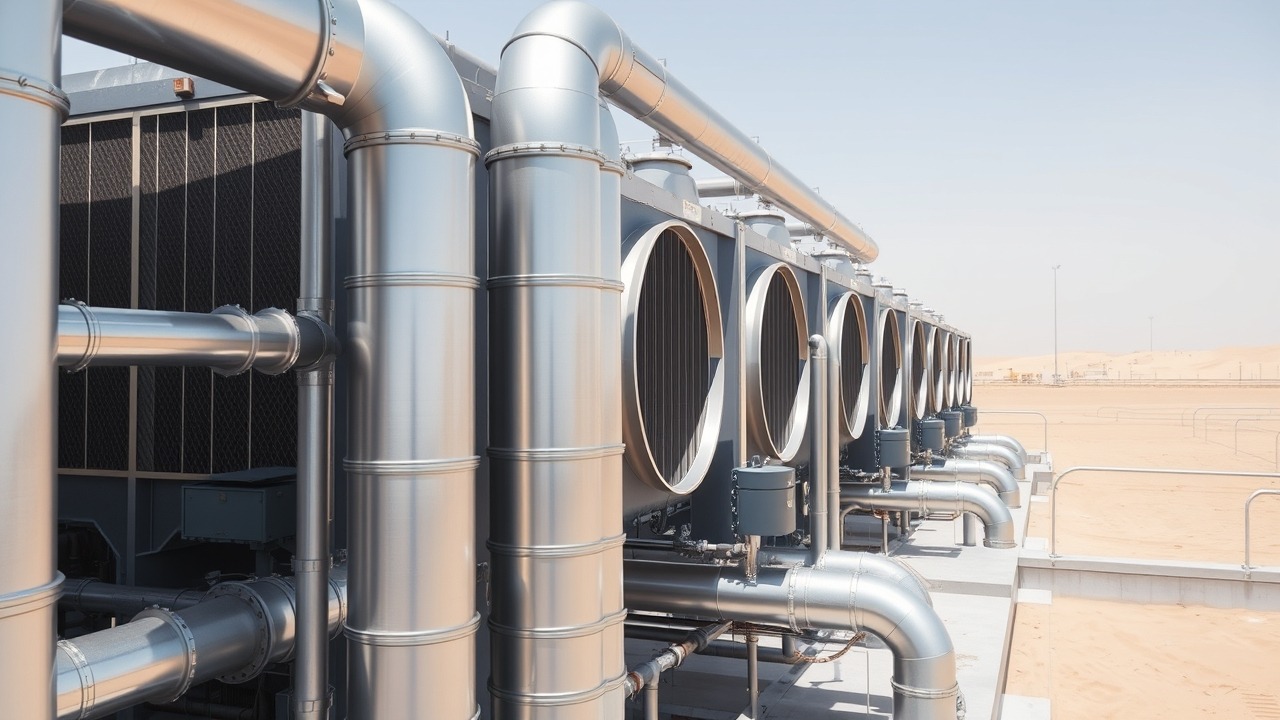
District Cooling vs. Chiller-Free
- 1. District Cooling: Cooling is provided by a centralized plant (like Empower or Emicool). Tenants pay for their actual consumption plus a fixed capacity charge. This is very common in newer areas like Business Bay.
- 2. Chiller-Free: The landlord covers the cost of the air conditioning, or it is included in the building’s general electricity bill. This is highly desirable for tenants as it significantly reduces monthly utility overheads.
10. Conclusion and Strategic Advice
Navigating the world of commercial property in the UAE requires a firm grasp of these Dubai commercial real estate terms. Whether you are a startup looking for your first fitted office or a multinational corporation planning a massive shell and core fit-out, knowing the legalities of Ejari, the nuances of Free Zone jurisdictions, and the technical requirements of your space is the key to a successful tenure. The market is fast-paced, and while the opportunities are immense, the complexity of the regulatory environment means that professional guidance is often the best investment you can make. If you are ready to take the next step in your commercial journey, contact our experts today for personalized assistance.
Frequently Asked Questions
What is the most important document for a commercial tenant in Dubai?
The Ejari certificate is the most critical document. It validates the lease with the government, enables trade license applications, and is necessary for any legal dispute resolution.
Can I change a Shell & Core unit into a Fitted unit?
Yes, that is the standard process. A tenant hires a contractor to perform the fit-out, but this requires an NOC from the landlord and permits from the relevant authorities.
How is the rent increased in commercial real estate?
Rent increases are generally governed by the RERA rental index. However, many commercial contracts include specific “escalation clauses” that pre-determine rent hikes over a multi-year period.
Are service charges paid by the landlord or the tenant?
In most commercial leases in Dubai, the landlord pays the service charges to the building management. However, in “Net Leases,” these costs may be passed directly to the tenant. Always check your contract terms.
Is VAT applicable to commercial sales?
Yes, a 5% VAT is applicable to the sale of any commercial property in the UAE. This is a mandatory tax collected by the Federal Tax Authority (FTA).