
Commercial Real Estate Costs for Tenants in Dubai: Parking, Loading Docks, and Floor Plates
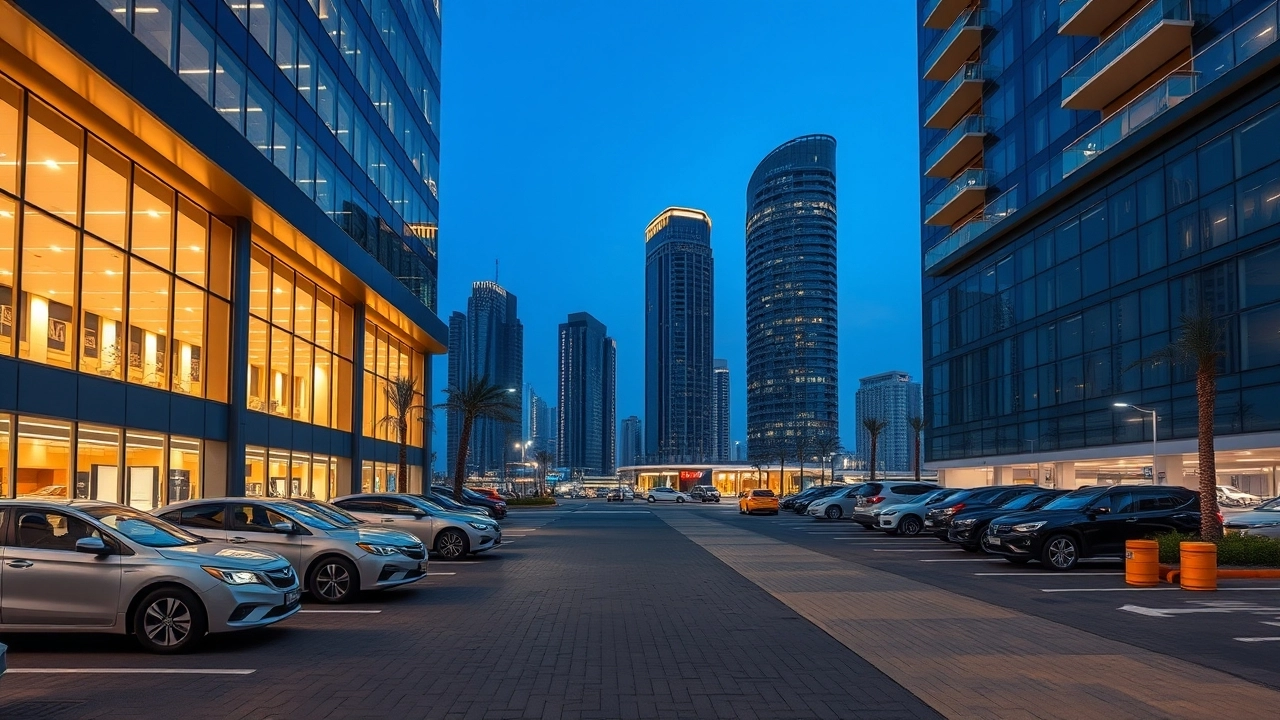
Navigating the complexities of the UAE property market requires a deep understanding of how physical building specifications translate into financial liabilities. For businesses establishing a presence in the Middle East, calculating commercial real estate costs for tenants in Dubai goes far beyond the base rent per square foot. Factors such as parking ratios, the efficiency of loading docks, and the configuration of floor plates play a pivotal role in determining the total cost of occupancy. At West Gate Dubai, we specialize in helping corporate clients decode these variables to ensure long-term operational profitability.
Understanding Commercial Real Estate Costs for Tenants in Dubai
When a business signs a lease in hotspots like Business Bay, DIFC, or Jumeirah Lake Towers (JLT), the headline rent is often just the tip of the iceberg. To truly grasp the commercial real estate costs for tenants in Dubai, one must look at the ‘Total Occupancy Cost.’ This includes service charges, utility deposits, fit-out expenses, and, most importantly, the hidden costs associated with building inefficiency.
Dubai’s commercial landscape is unique. The Dubai Land Department (DLD) and RERA provide a robust framework for leasing, but the technical specs of a building are often left to the developer’s discretion within zoning laws. A building with a lower rent might actually be more expensive if its floor plate is inefficient or if you have to pay for external parking permits for your staff. Understanding these nuances is essential for any Dubai real estate investment guide strategy.
The Direct Link Between Parking Ratios and Commercial Real Estate Costs for Tenants in Dubai
In a city where the car is king, parking is a non-negotiable asset. In Dubai, parking ratios are typically expressed as one space per ‘X’ square feet of leased area. The standard Grade A office ratio is often 1:500 sq. ft. or 1:1,000 sq. ft. However, if your business has a high headcount density (like a call center or a tech hub), a 1:1,000 ratio will leave your employees stranded.
The Financial Burden of Low Parking Ratios
If the building does not provide enough allocated spots, the commercial real estate costs for tenants in Dubai rise through:
- Paid Monthly Permits: Renting additional spots from the developer or RTA (Roads and Transport Authority) can cost between AED 5,000 to AED 15,000 per spot annually.
- Employee Retention: Poor parking access leads to higher staff turnover, which incurs recruitment and training costs.
- Client Accessibility: If clients cannot find parking, it directly impacts business revenue.
When evaluating off-plan properties in Dubai for commercial use, always scrutinize the parking allocation in the disclosure statement. A strategic tenant will negotiate for additional parking rights upfront during the initial lease negotiations.
How Loading Docks Influence Industrial Commercial Real Estate Costs for Tenants in Dubai
For companies in the logistics, e-commerce, or manufacturing sectors, loading docks are the heartbeat of operations. In industrial hubs like Dubai Investment Park (DIP) or Jebel Ali Free Zone (JAFZA), the configuration of loading bays can significantly alter the commercial real estate costs for tenants in Dubai.
Operational Efficiency and Dock Specs
A warehouse with an insufficient number of loading docks creates a bottleneck. If your trucks are idling for two hours waiting for a bay, you are losing money on fuel, labor, and delivery windows. Furthermore, the type of dock matters:
- Dock Levelers: Essential for handling various truck heights. Without them, you need manual ramps, increasing the risk of workplace injuries and insurance premiums.
- Turning Radii: If the yard space is too tight, it increases the time taken for maneuvers and the likelihood of vehicle damage.
- Cross-Docking Capabilities: For high-velocity businesses, the ability to move goods from receiving to shipping without storage is a massive cost-saver.
Understanding these logistics is as critical as knowing what the costs of buying property in Dubai are for industrial investors. Poorly designed loading areas can increase operational overheads by 15-20% annually.
Optimizing Floor Plates to Manage Commercial Real Estate Costs for Tenants in Dubai
The “floor plate” refers to the architectural layout of a single floor in a building. Not all square footage is created equal. The commercial real estate costs for tenants in Dubai are heavily influenced by the “Efficiency Ratio”—the difference between the Gross Floor Area (GFA) and the Net Leasable Area (NLA).
Efficiency and the “Loss Factor”
In many older Dubai buildings, large central cores (elevators, stairs, bathrooms) and thick structural columns can eat up 25% of the floor space. This means you are paying rent on space you cannot actually use for desks or equipment. This is known as the “Loss Factor.”
When looking at off-plan properties in Dubai, modern developers are moving toward “column-free” designs. A column-free floor plate allows for flexible fit-outs and higher density, effectively lowering the cost per employee. If you are comparing two offices—one at AED 150/sq. ft. with a 20% loss factor and another at AED 170/sq. ft. with a 5% loss factor—the “more expensive” one is actually the better deal.
Natural Light and HVAC Costs
Floor plate depth also affects commercial real estate costs for tenants in Dubai. Deep floor plates (where the center is far from windows) require more artificial lighting and more complex HVAC (heating, ventilation, and air conditioning) systems to maintain a consistent temperature in the desert heat. This increases your monthly DEWA (Dubai Electricity and Water Authority) bills.
Comparative Analysis of Cost Drivers
To help you visualize how these factors interact, we have prepared a comparison table based on current Dubai market trends.
| Feature | Office Sector Impact | Industrial Sector Impact | Cost Sensitivity |
|---|---|---|---|
| Parking Ratio | High (Staff/Client access) | Medium (Fleet storage) | High – Direct impact on payroll |
| Loading Docks | Low (Service deliveries) | Critical (Supply chain) | Extreme – Affects core revenue |
| Floor Plate Efficiency | High (Desk density) | High (Racking/Storage) | Medium – Affects rent ROI |
Hidden Operational Expenses and UAE Regulatory Compliance
Beyond the physical structure, the commercial real estate costs for tenants in Dubai are subject to the regulatory environment managed by the Real Estate Regulatory Agency (RERA). Tenants must be aware of the “Ejari” registration fees, which are mandatory for all commercial leases.
Furthermore, the tax implications of owning property in Dubai (or leasing it) have evolved with the introduction of Corporate Tax. While there is no personal income tax, businesses must account for VAT (Value Added Tax) at 5% on commercial rents. If your building has poor energy efficiency due to an outdated floor plate design, your VAT-inclusive utility costs will erode your margins faster than you might expect. For a deeper dive into financial planning, see our guide on tax implications of owning property in Dubai.
Comparing Property Types: Office vs. Industrial Commercial Real Estate Costs for Tenants in Dubai
The impact of these three factors—parking, loading, and floor plates—varies significantly depending on your business model. For instance, in Dubai Marina, the focus is almost entirely on parking and floor plate aesthetics. You can explore more about this in our article on Dubai Marina apartments and commercial hubs.
Conversely, in emerging industrial areas, the loading dock is the primary driver of commercial real estate costs for tenants in Dubai. A warehouse with 10 loading bays in a high-demand area like Al Quoz will command a premium over a larger warehouse with only 2 bays. This is why investing in emerging areas in Dubai requires a technical eye, not just a financial one.
The Rise of ESG and Sustainability
Modern tenants are increasingly looking at ESG (Environmental, Social, and Governance) scores. A building with an efficient floor plate that maximizes natural light reduces carbon footprints. In the coming years, we expect the commercial real estate costs for tenants in Dubai to include “Green Levies” or, conversely, “Green Discounts” for sustainable buildings. Staying ahead of this trend is a key part of why you should invest in Dubai’s real estate market in 2025.
Conclusion: Navigating Commercial Real Estate Costs for Tenants in Dubai with West Gate
In summary, the commercial real estate costs for tenants in Dubai are a product of much more than just the location and the annual rent. A strategic tenant must perform due diligence on parking ratios to avoid hidden permit costs, evaluate loading dock efficiency to protect their supply chain, and analyze floor plate loss factors to ensure they aren’t paying for “dead air.”
At West Gate Dubai, we pride ourselves on being more than just brokers; we are consultants who understand the technicalities of the Dubai market. Whether you are looking for an office in a skyscraper or a logistics hub in a free zone, we help you calculate the true commercial real estate costs for tenants in Dubai before you sign on the dotted line. To find the perfect space that aligns with your operational needs and budget, contact our expert team today.